One thing most merchants only discover after scaling on Shopify: you don't fully control your SEO infrastructure.
Yes, Shopify automatically generates sitemaps and basic product feeds. That works fine for many small stores.
But once businesses grow, expand internationally, integrate marketplaces, or need advanced SEO strategies, limitations start appearing quickly.
Typical Pain Points
- Limited sitemap customization
- No true server-level SEO control
- Difficult dynamic indexing strategies
- Restricted custom XML generation
- Feed logic tied to apps
- Complicated multi-tenant or multi-brand setups
- Hard to create tenant-specific SEO rules
- Marketplace feed flexibility becomes expensive and fragmented
This Is Exactly Why I Built RootDock Differently
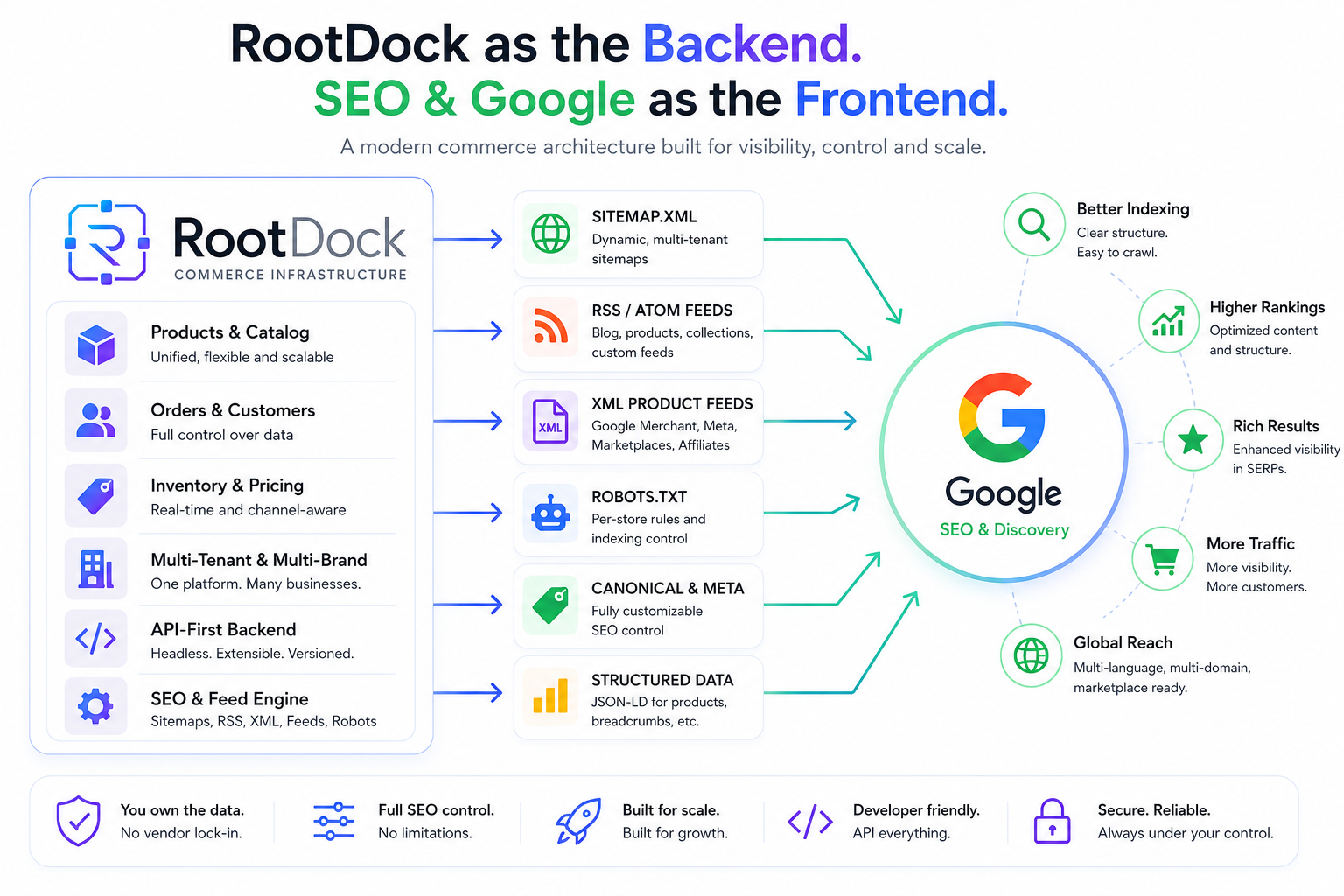
RootDock is API-first and headless by architecture, which means merchants and developers get the building blocks of SEO, not a black box.
- Fully customizable sitemap generation
- Dynamic XML / RSS / Atom feed creation
- Tenant-specific SEO strategies
- Marketplace-specific product feeds
- Custom indexing logic
- Multi-domain & multi-brand support
- Dedicated API versioning per tenant
- Real-time feed generation without app dependency
- Easier integrations with Google Merchant, Meta, affiliates, marketplaces, and external systems
Modern E-Commerce Is No Longer Just About a Storefront
Today it is about:
- SEO flexibility
- Integration freedom
- Scalability
- Infrastructure ownership
- Long-term platform independence
Instead of working around platform limitations, businesses should own their commerce infrastructure.
That is the direction we are building with RootDock.
Take Back Control of Your SEO
Launch on an API-first commerce platform built for sitemap, feed, and indexing freedom across every brand and marketplace.